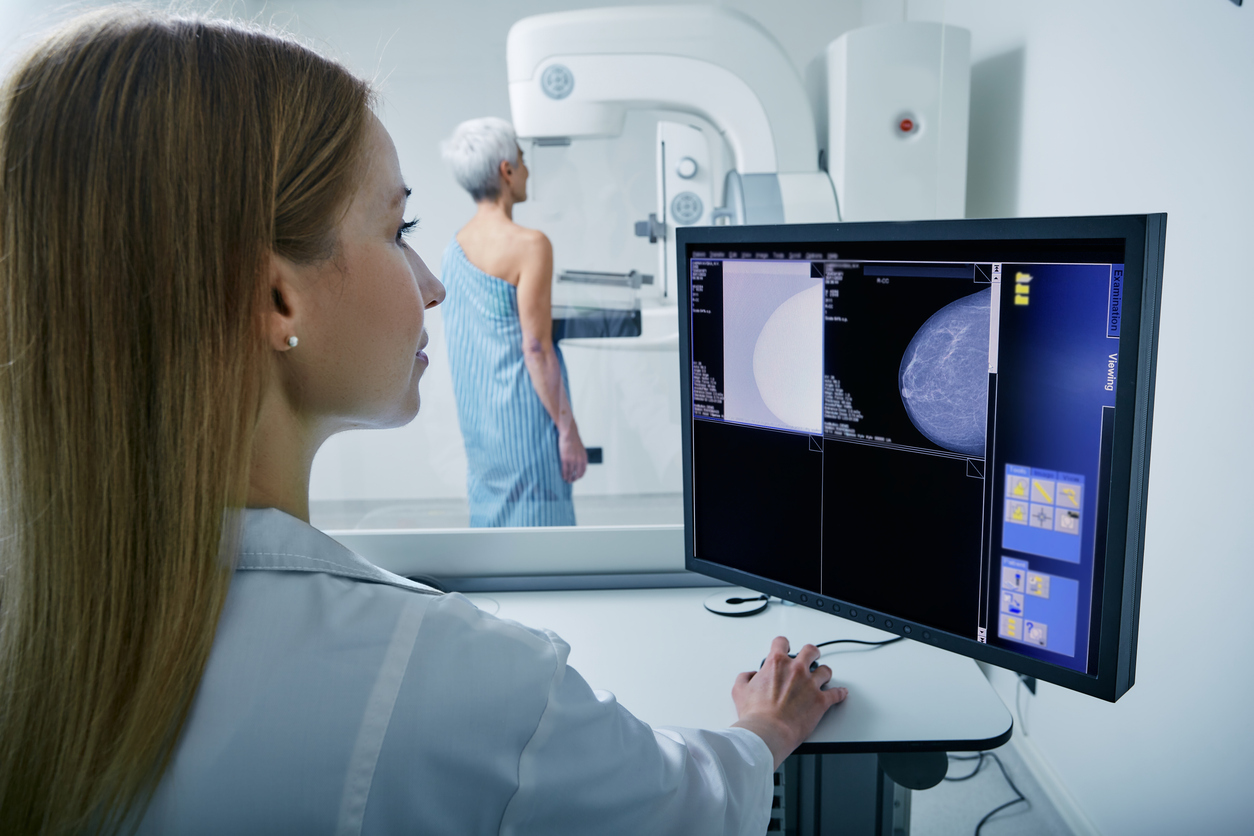
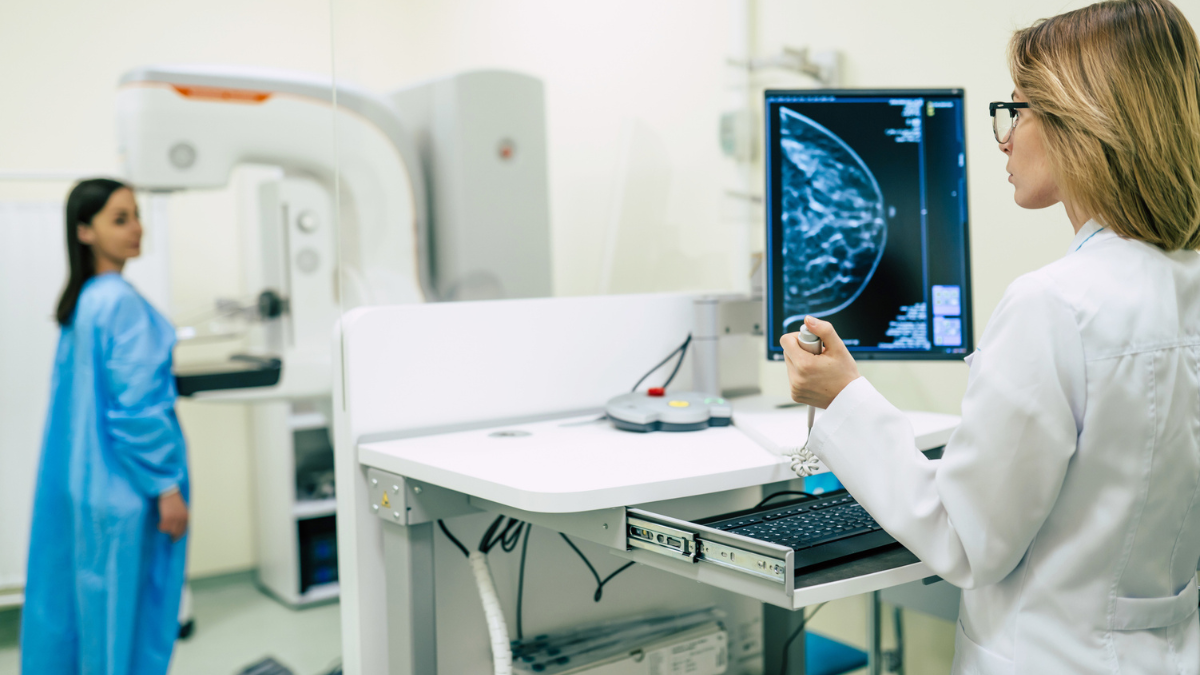
The company targets five to seven sites for its pivotal study spanning rural/community health systems, large academic medical centers, and independent imaging centers across the country.
Research Triangle Park, NC – April 28, 2026 – Calidar, Inc., an innovative start-up in precision diagnostic imaging, today announced the completion of enrollment in its first-in-human clinical study of the 4D Mammography system. The study, conducted in collaboration with Baptist Health Hardin in Elizabethtown, KY, enrolled 61 patients and represents a significant milestone in the development of a next-generation imaging platform designed to improve breast cancer diagnostics.
The 4D Mammography system leverages X-ray diffraction to measure molecular-level signals within breast tissue — a capability not available in conventional mammography. With enrollment now complete, Calidar and its clinical partners will proceed with data analysis to evaluate the system's ability to distinguish between healthy tissue and breast cancer. "First-in-human is the gate that separates promise from evidence," said Dr. Carpenter, CTO of Calidar. "We cleared it — and the early performance data is directionally aligned with our clinical thesis, with early signals pointing to up to 4x improvement in precision over 3D mammography. Full analysis is ongoing, but we now have human evidence that suggests 4D Mammography works. Everything that follows is about scale."
The first-in-human study was initiated in August 2025, when the team successfully imaged the first patient with the 4D Mammography system. The completion of enrollment is the next major step in what Calidar believes could redefine how breast cancer is detected at the point of imaging.
Breast cancer diagnostics remain a significant clinical challenge. In the United States, approximately 1.8 million breast biopsies are performed each year, with 70-80% ultimately diagnosed as benign. These unnecessary procedures contribute to over $7.4 billion in annual healthcare costs and place a growing burden on radiologists and pathologists. At the same time, inconclusive imaging results contribute to delayed diagnoses for an estimated 60,000 breast cancer patients annually. By measuring the structure and composition of tissue—not just its shape or density—the 4D Mammography system aims to provide a new dimension of diagnostic clarity.
Baptist Health Hardin served as the clinical research site for this study. The study enrolled patients who presented with findings requiring further evaluation. Once enrolled, participants received a 4D Mammogram to test the system’s ability to differentiate between healthy and cancerous breast tissue and benchmarks performance against existing mammography devices. Participation in the study was conducted under investigational use; results were not used to inform individual patient clinical care. Data analysis is ongoing, and performance results have not yet been disclosed. It is anticipated that a peer reviewed paper on the study will be published in the second half of 2026.
To support the final phase of developing 4D Mammography, Calidar is initiating a Series A raise that will fund a multi-site pivotal study, nationally. Following the conclusion of this pivotal study, Calidar anticipates submitting these results in pursuit of FDA approval for 4D Mammography.
The 4D Mammography system is investigational and has not been cleared or approved by the U.S. Food and Drug Administration. It is not available for commercial sale and is limited to investigational use in the United States under FDA’s abbreviated IDE requirements.ESEARCH TRIANGLE PARK, N.C. — August 12, 2026 — Calidar, Inc. today announced the successful close-out of its first-in-human (FIH) clinical study evaluating the Eidos Prism™, a modular add-on device that brings Volumetric X-Ray Diffraction (VXD) — also known as 4D Mammography — to existing 3D mammography systems. As previously announced, the study enrolled 61 patients at Baptist Health Hardin in Elizabethtown, Kentucky.
With the study now closed out, clinical investigators have submitted two manuscripts for peer review: one detailing the technology's performance in the FIH cohort, and a second covering results of an accompanying reader study. Both manuscripts are currently under review, with publications anticipated later this year.
Closing out the FIH study and submitting both manuscripts marks the transition from first-in-human evidence gathering to preparation for a multi-site pivotal study.
Building on the Baptist Health Hardin Partnership
Calidar's first clinical site relationship, with Baptist Health Hardin, supported the FIH study from first patient imaged through study close-out.
“As lead investigator for the first clinical application of Volumetric X-Ray Diffraction, the team at Calidar was a pleasure to work with. They made it easy for me to bridge the needs of my clinical practice with the expectations of our local institutional review board in addressing the potential complexities that can arise with any patient research. “ - Dr. Craig Kamen, PI
From Calidar’s perspective, this relationship was the best possible scenario in a first-in-human partnership and an opportunity to learn from each other to inform future studies like the pivotal kicking off in 2027.
"Dr. Kamen and the entire team at Baptist Health treated this study as a true collaboration, built upon a shared commitment to providing clearer information to patients earlier in the diagnostic process. This is exactly the kind of partnership we aim to build with each site joining us for the pivotal study.” - Thomas Blum, VP Clinical, Calidar
Forward Momentum: The Pivotal Study
The company is also beginning active conversations with sites for its planned 2027 pivotal study, which will expand testing across a broader and more diverse patient population. Calidar is evaluating pivotal trial sites across four U.S. regions — Northeast, Southeast, Southwest, and Northwest — spanning rural/community health systems, large academic medical centers, and independent imaging centers.
Calidar is inviting health systems and imaging centers interested in learning more about the upcoming pivotal study and potential site partnership to reach out.
Pivotal Study Partnership Inquiries should be directed to Thomas Blum, VP of Clinical at Calidar.
Email us
About Calidar
Calidar, Inc. is a medtech company developing the world's first clinical application of volumetric X-ray diffraction imaging for breast cancer diagnostics. Its 4D Mammography system reads the molecular fingerprint of breast tissue — delivering new diagnostic information that today's 3D imaging cannot provide. The company is headquartered in Research Triangle Park, NC.
About Baptist Health Hardin
Baptist Health Hardin serves approximately 400,000 residents in 10 central Kentucky counties — Hardin, LaRue, Meade, Breckinridge, Grayson, Nelson, Hart, Bullitt, Green and Taylor. The Elizabethtown hospital operates 300 acute care beds.
Baptist Health Hardin includes 74 points of care across the service area, including a Cancer Care Center, Outpatient Surgical Center, and three Urgent Care locations. The hospital’s network includes nearly 500 physicians and advanced practice clinicians representing more than 40 specialties plus primary care. Baptist Health Hardin has also been twice awarded the Pathway to Excellence® designation for excellence in nursing services by the American Nurses Credentialing Center (ANCC).